On the Road Again We arrived in Granada at 11 AM. Tired, exhausted, and excited. Probably mad at one another too. The only excitement we encountered that morning was being accosted by some drunken Spaniards as we left for the bus station at 7 AM and the bus not being at the platform listed on our tickets. Luckily, the intoxicated Spaniards were left in the dust as I (Clay) hurriedly dragged a fifty pound bag down a cobblestone sidewalk not so effortlessly, and the bus was resolved when I asked where our bus was. The bus driver politely told me it was the bus in front of me. Wrong platform, right bus. I guess we are are still learning the Spanish ways.
Although uneventful, the bus ride provided a glimpse of Spain’s rural landscape for us to enjoy. It is interesting that they seem to prefer to build everything as close to the city center or nearest plaza as possible instead of building individual houses with little landscaped yards and swing sets in the back.
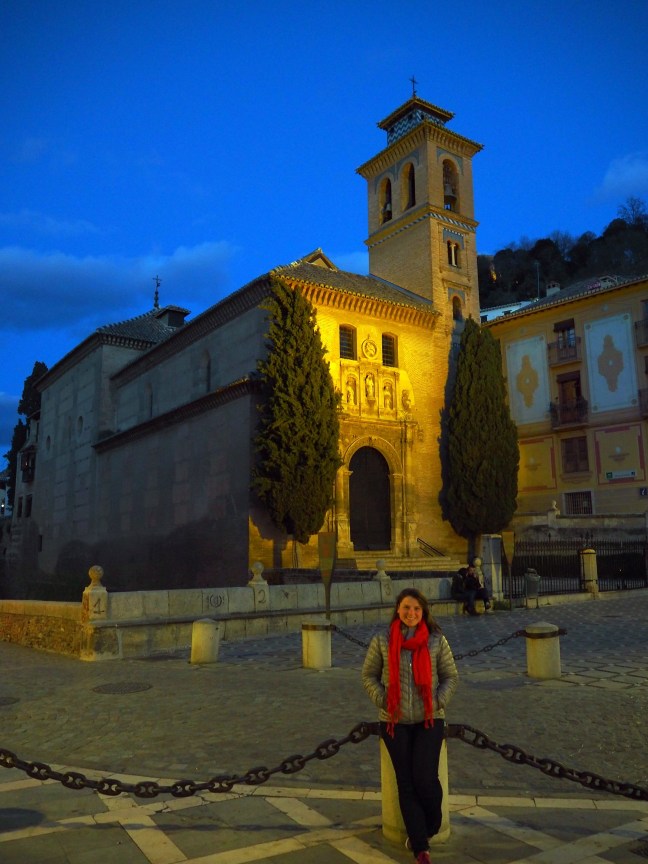
When we finally reached Granada, we hopped in a taxi and headed towards the city center. We started at the crowded Plaza de Santa Ana, where Elizabeth needed a coffee and I needed a damned churro. We got both and enjoyed neither. The coffee was burned and the churro’s had no cinnamon or sugar. As it turns out, only Americans tend to do the cinnamon and sugar bit, per Wikipedia and my own personal experience at a churro stand in Granada. At least we salvaged the coffee by mixing it with the chocolate sauce provided with the churros. ¡Delicioso!

Sufficiently rested and full of chocolate coffee and funnel cake, Elizabeth headed to mass and I went to find our Airbnb while hauling around a hundred pounds of luggage up several long hills. I was Sisyphus and Elizabeth was Sister Maria.
Adventure in the Albayzín Our first tour in Granada consisted of the Albayzín and its Muslim Moorish past. But our tour did not began with the Muslim history, instead our guide began with a few ghost stories. The legends and lore of ancient cities always seem to carry with them great tales of loves lost and heinous crimes committed. Each of which come with it’s very own spirit. I’m not sure how many people believe these anymore, but it does make for interesting histories.
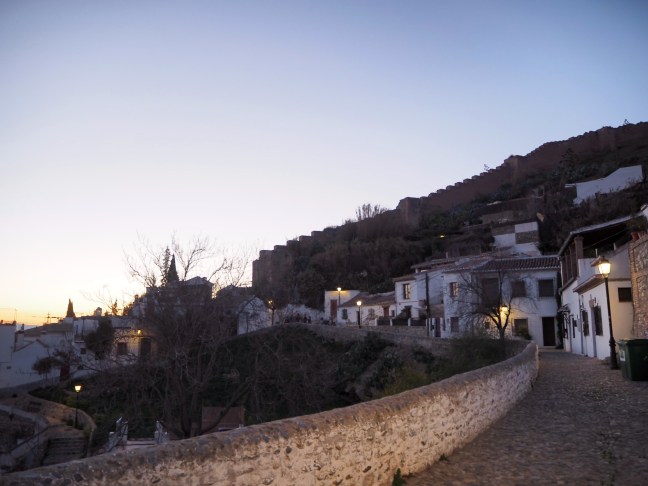
As we ascended step after step, we learned about the history of the Albayzín area. As always, it begins with the Romans, throws in a synagogue, torn down to build a mosque, and then converted to a Catholic church. It is still fascinating to learn about such happenings a thousand years ago.
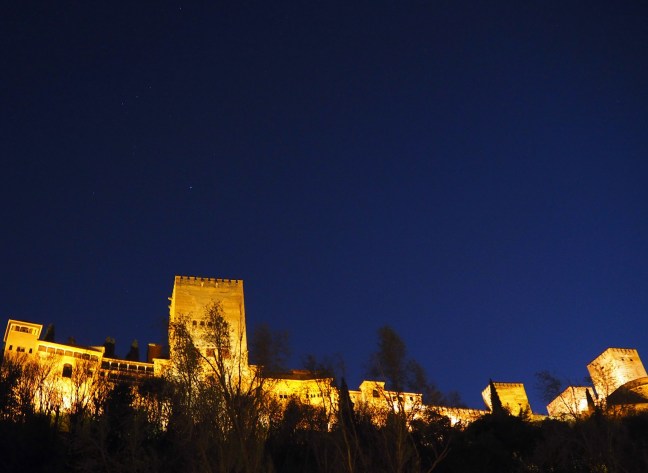
In continuing to climb the hillside, we were granted better and better views of the Alhambra. A fortified city within a fortified city, it happens to be the most visited site in all of Spain.

On our tour, we continued to pass houses on the hillsides and learn more about the Muslim architecture of planning and building homes, which all include a garden or patio in the center of the house with the rooms all surrounding the patio. We happened to stay in this style of house while in Granada.
Further up the mountain, we encountered Sacromonte (Sacred Mountain), dubbed as such due to a few lies told in order to make the location a pilgrimage for Catholics. It never became much of anything other than having a fascinating name. In Sacromonte, most of the residents live in cave houses. Warm in the winter and cool in the summer, the caves are naturally climate controlled. All are painted white and are very old. They are predominantly lived in by the gypsy community, which in Spain means families long ago originating from India.
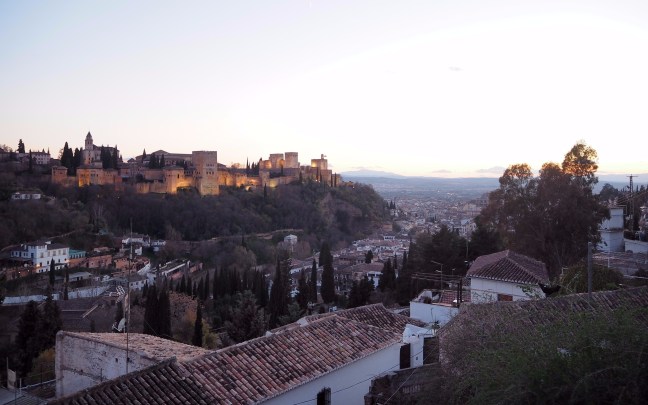
Our final stop allowed us another amazing view of the Alhambra.
Hiking Boots and Snowballs The next day we woke up early again to head out on our hike. Inclement weather had forced out our ability to climb a much higher mountain with pick axes and crampons. Instead, we climbed a much smaller mountain that was probably equally as terrifying. Our hike began pleasantly enough with a couple of hours of solid uphill walking. It then moved to sliding uphill while traversing scree to ascend the top of the mountain.

This bit was extremely difficult. We had not encountered this type of climbing before and every step taken meant sliding back at least a couple of inches. There were no solid steps. And if you fell you were not going to survive the fall.
Since you are still reading, you now know we survived.
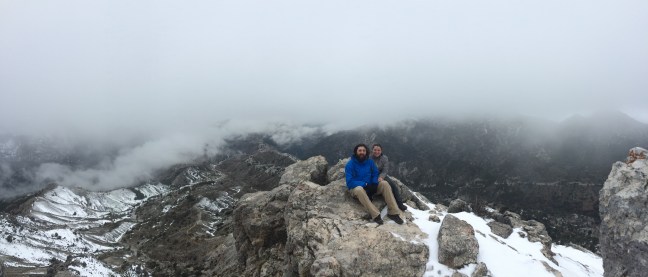
We did make it to the top of the mountain and were able to enjoy the beauty of the Sierra Nevada’s for a few minutes. But after about 2-3 minutes, the fog rolled in through the valley. And then the sleet came. And we worked as quickly as possible to safely descend our treacherous path.
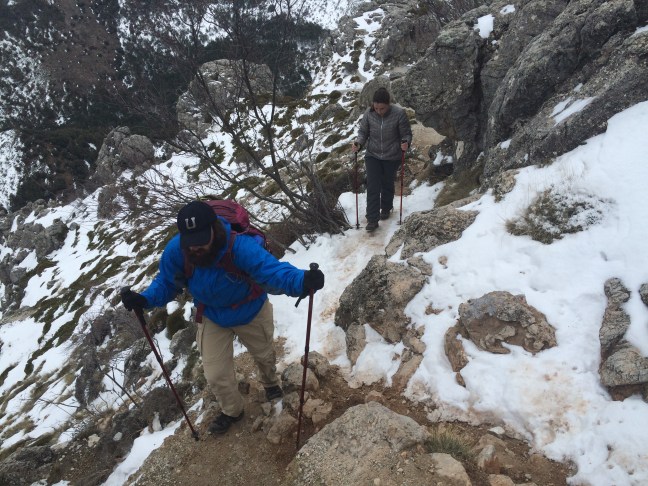
As we made it back down to the flatter section, our guide offered us two options. We chose the long way home. For that reason, we enjoyed a couple of inches of snow, sleet, freezing rain, and a few snowballs. We also were able to see many Spanish Ibex (mountain goat), a wild boar, and some bulls.
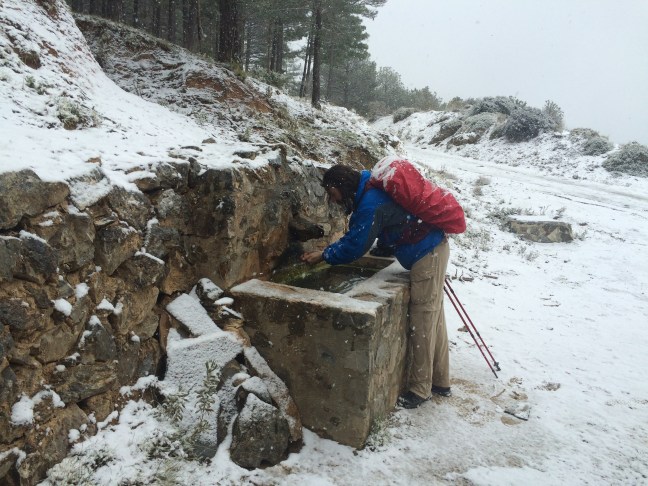
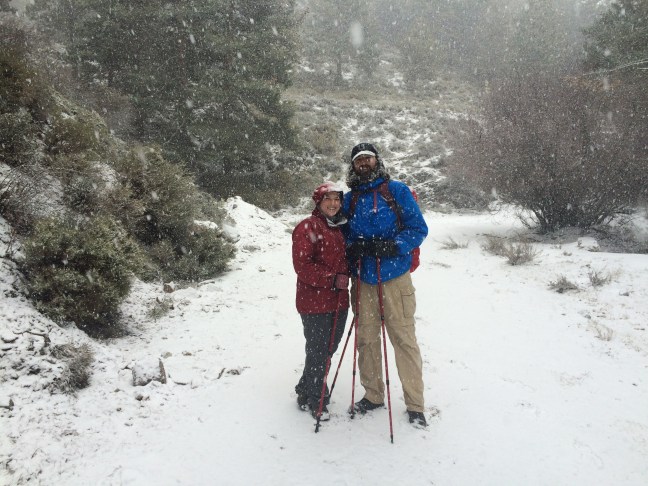
It was a rewarding hike covering between 10-11 miles of difficult walking.
“God is the Only Victor” It’s probably no surprise that we were very sore the next day but there was no rest for the weary because we were visiting the Alhambra.We had a small private tour to visit the Alhambra and we began the moment it opened, as did a lot of other people. This is one of the more famous buildings in Spain. In 2014 it played host to 2.4 million people. Even in non-busy time, the place was packed. The palace itself was almost lost to history. Until recently (around the 1800s) the Alhambra had fallen into disrepair and was a haven for the homeless of Granada. It wasn’t until Washington Irving (think Sleepy Hollow and Rip Van Winkle) stayed at the Alhambra and wrote about his experiences in “Tales of the Alhambra.” This solidified the importance of the Alhambra and led to a grand restoration of the palace that still continues today.
The Alhambra is a beautiful place. Stylistically, it is much like the Alcazar in Sevilla, but with many more fountains. The Court of Lions and Fountain of Lions is one of the more impressive pieces still remaining from the original owners. All around was inscribed the Caliph’s motto “God is the only Victor.”


Once the monarchy took control of Granada, Charles the I/V added a palace inside the grounds of the Alhambra, sticking out like a sore thumb amidst the Moorish architecture. Thankfully, much of the rest of the grounds are still from the times of the Moors.

On our tour we were able to see many of the rooms of the palace, the gardens, and just up the hill, the summer home of the Caliph. As it turns out, the Caliph of the Alhambra wanted a second house for the summer time so he built his second house about 100 feet above and 500 feet away from his winter/spring/fall house. This was a home in which he would never sleep. So really more of a summer day house. Must be nice.
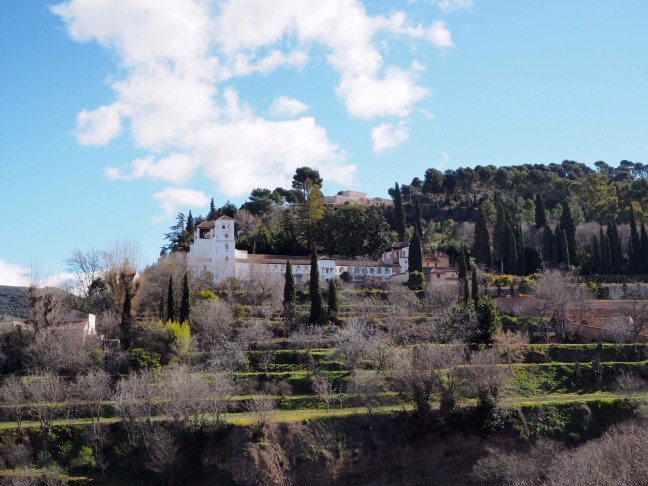
After leaving the Alhambra, we walked around the city and enjoyed the winding streets and stores lining the back alleys. Much of southern Spain still clings strongly to the Moorish culture, no place moreso than Granada. Most of the authentic wares in the stores are direct from Marrekech and many of the restaurants in the area serve predominantly Moroccan cuisine. We did some shopping, soaked up our last hours in Granada and headed home, ready for a long bus ride back to Madrid.
 cornetravel
Nice photos
LikeLike
MaJu would tell you no rest for the wicked, not the weary. 😉
LikeLike
I’m so glad you’re having a good time. Clay looks like Yukon Cornelius.
LikeLike