Madrid Part Uno: Home of Bullfighting and American politics

Hello City Living! We caught the bus in the right place this time, leaving Granada at 8 AM.  A five hour bus ride to Madrid was not so bad.  Rolling hills, a bit of rain, intermittent wifi.  Still beat driving it in a car.

Of course, the night before we left Granada we began to miss it.  And everyone we seem to meet talks about how they wish they could move to Granada.  Us included.  It was wonderful.

But here we are in Madrid.  First stop, Pans & Company.  P&C is a Spanish fast food chain.  I had been wanting to try some authentic Spanish fast food. It did not disappoint.  Soggy fries, incredibly heavy on the mayo/aioli, oddly shaped piece of chicken. Felt like being at a Subway.
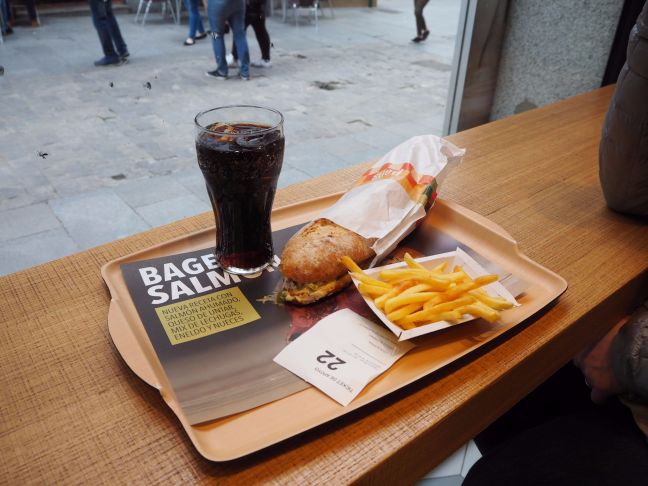
JFS90512.ORF

This was yet another poor choice by me (Clay) for restaurant food selection. For a while in Atlanta, we stopped allowing Elizabeth to choose her own meal because she was often disappointed in the selection.  Going out is too expensive to make that kind of consistent mistake.

We are about to enact the same policy for me here in Spain.  For every good dish eaten, we are all but guaranteed to endure a serious food blunder during the meal.

We will keep you updated.

After our hearty lunch, we headed to the largest bullring in the entire world (with the exception of the ring in Mexico City).  Seating about 25K, the ring is a beautiful interpretation of Neo-Mudejar design. The circus is not Neo-Mudejar, it is more Contemporary-Barnum and is usually not part of the bullring.

We chose to do a tour as opposed to a fight. We both agreed that watching a bull get murdered was not on our bucket list.  The tour takes you around the ring providing insight into the fight, the history of the sport, and how bulls and man have both perished inside the ring.

They also show gory videos of the bulls being stabbed. Not great to watch.

Because the circus was in town, our pictures also contain a big top in the middle of the ring.  We saved a few bucks on the tour because we couldn’t see all the sand on the floor of the ring.

After the bullring tour, we caught the metro again back to our Airbnb to get settled and sorted before out first walking tour in Madrid.

The tour for the evening was a Spanish Inquisition tour. Elizabeth enjoys tours with a more sinister side. I just goes along for the ride.  I was not thrilled though when our tour began and the guide indicated that only one of the buildings we would see tonight was actually a part of the Inquisition.

Doesn’t sound like much of an Inquisition tour does it? Well as it turns out, after the Inquisition was stopped in the early 1800’s, those in charge made the decision to tear down all the buildings associated with the Inquisition.  So our tour consisted of going to the locations where buildings were located and learning about what took place at each spot.

It was an interesting and depressing tour about the history of the Spanish Inquisition.  We learned a great deal. The tour guide was excellent in providing us with quite a bit of info on the dynamics of what took place and how it shaped Spain. Mostly through executions and death sentences.

He also took us on a couple of streets to show us non-touristy places to visit and have tapas.  After the tour, we inquired about other tapas places and away he went.  Leading us across who knows how many streets, past the bums and the hookers, to the “gay”borhood (as our guide so eloquently stated). This is where our guide lives and eats.

It was here where we learned we had been doing tapas wrong the entire time.  Oh well, silly Americans.  “True” tapas only happen when the bar gives you food for free after you order a drink.  So we let our guide do the talking.  He ordered a couple of glasses of wine and immediately a couple of plates of food arrive.  One plate of chorizo, potatoes, and peppers. Another plate of chicken, potatoes, and peppers.  And plenty of bread.

We stood in amazement as our small investment of six bucks manage to turn into two drinks and enough food for our dinner.  After our guide left, we ordered two more drinks because we were enjoying the atmosphere. Of course, two more plates arrive.  We could barely finish them.  Honestly, you don’t even want to drink anything else because you can’t eat another thing.

One small dirty note on tapas, after you finish your bite of food, whatever remains in your hand, bet it a napkin, toothpick, bone, olive pit, etc., you throw it in the floor.  It makes no sense.  Everyone throws their trash down on purpose.  We talked to several people about this because it seems so counterintuitive.  We were told the more trash in the floor, the better the tapas place because more people have been there.

Another dirty note. We learned that American politics is a very big deal internationally.  We are both glad to be avoiding American politics while on this trip and the nonsense that comes along with extreme bitterness between politics parties.  Spain has plenty of issues with their own politics, but they are also keenly aware of US politics, candidates, and how our government, for better or worse, shapes the global landscape.

It was an eye opening experience for us to have people share their concerns about the threat of Donald Trump as POTUS.  These people were discussing the primaries as if they had a vested interest in the outcome.  International citizens are increasingly worried about the future of America.

Another Day, Another Tour Arising the next morning, we had a full slate of activities. First up, another tour of the city. This tour was a general city-of-Madrid tour as opposed to the more specific Inquisition tour. We try to have at least one walking tour to every city we visit. It helps us get our bearings around a nice sized section of a city. The tours tend to hit many of the highlights of the history of a city. In Spain it mostly covers executions and the crown. The best part about this tour is that we had the same guide as the night before.

From the tour we headed to the Royal Palace. This is the main royal palace in Spain for the monarch, even though they don’t live there. Fabric walls, gilded ceilings, no pictures allowed. The rooms were large and generally over the top with dressings and design.

We shared an audio guide because we are cheap and enjoyed the odd looks people gave us while we huddled together discussing how to overthrow the monarchy. Or probably so we could get as close together as possible so we both could hear about what century the tapestries were made in.

If you go near the top of an hour you can hear the clocks in each room chime. Not all at one mind you, but every so often because the clocks area all off by 1-5 minutes so each room you visit has the chance for bells.

From the Palace we had no plans for a few hours, but it had been suggested to take a free trip to the cathedral across the plaza.  It’s the Cathedral of Madrid so it’s a big deal for the city.  Since we had some down time, and more importantly it was free, we thought we would try it out.

We have been pleasantly surprised that most of the cathedrals visited thus far were relatively different.  I would have revolted had each church been identical.  This church might have been my favorite thus far.  Odd stained glass, boldly painted ceilings. I can see why a traditionalist would hate this church.  No English guide here so we walked around and enjoyed the quiet.

After the Cathedral,  we stopped by the house to get sorted before heading out for tapas. Not on our own of course.  We are both too timid to try to navigate ordering tapas on our own. But with the help of a translator/caretaker, we were able to gorge ourselves on tapas and wine.

Who new trying to eat such small things would be so difficult?

Oh and more politics.

Granada: Castles, Climbs, and Churros

On the Road Again We arrived in Granada at 11 AM.  Tired, exhausted, and excited. Probably mad at one another too. The only excitement we encountered that morning was being accosted by some drunken Spaniards as we left for the bus station at 7 AM and the bus not being at the platform listed on our tickets. Luckily, the intoxicated Spaniards were left in the dust as I (Clay) hurriedly dragged a fifty pound bag down a cobblestone sidewalk not so effortlessly, and the bus was resolved when I asked where our bus was. The bus driver politely told me it was the bus in front of me. Wrong platform, right bus. I guess we are are still learning the Spanish ways.

Although uneventful, the bus ride provided a glimpse of Spain’s rural landscape for us to enjoy.  It is interesting that they seem to prefer to build everything as close to the city center or nearest plaza as possible instead of building individual houses with little landscaped yards and swing sets in the back.

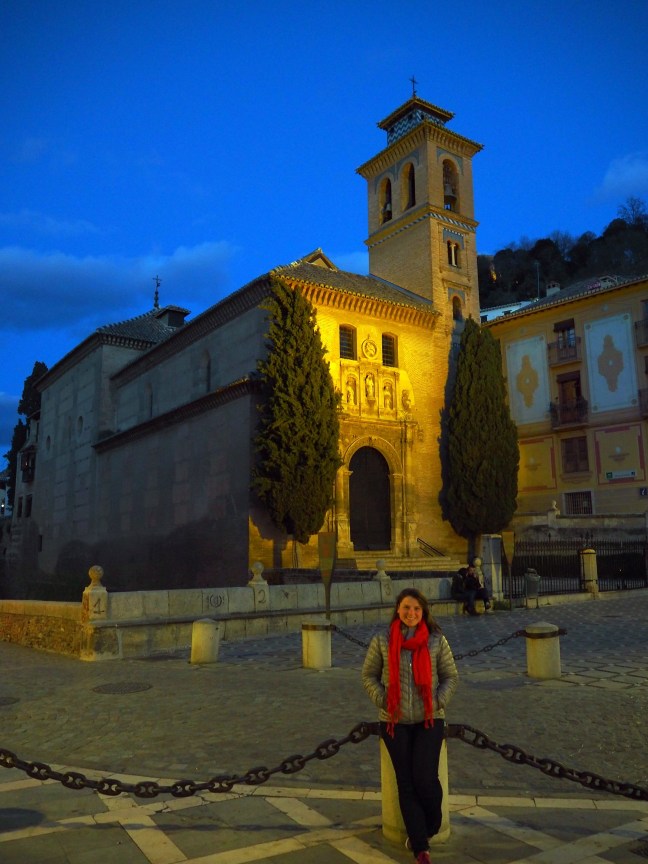
When we finally reached Granada, we hopped in a taxi and headed towards the city center. We started at the crowded Plaza de Santa Ana, where Elizabeth needed a coffee and I needed a damned churro. We got both and enjoyed neither.  The coffee was burned and the churro’s had no cinnamon or sugar.  As it turns out, only Americans tend to do the cinnamon and sugar bit, per Wikipedia and my own personal experience at a churro stand in Granada.  At least we salvaged the coffee by mixing it with the chocolate sauce provided with the churros. ¡Delicioso!

image (1)

Sufficiently rested and full of chocolate coffee and funnel cake, Elizabeth headed to mass and I went to find our Airbnb while hauling around a hundred pounds of luggage up several long hills. I was Sisyphus and Elizabeth was Sister Maria.

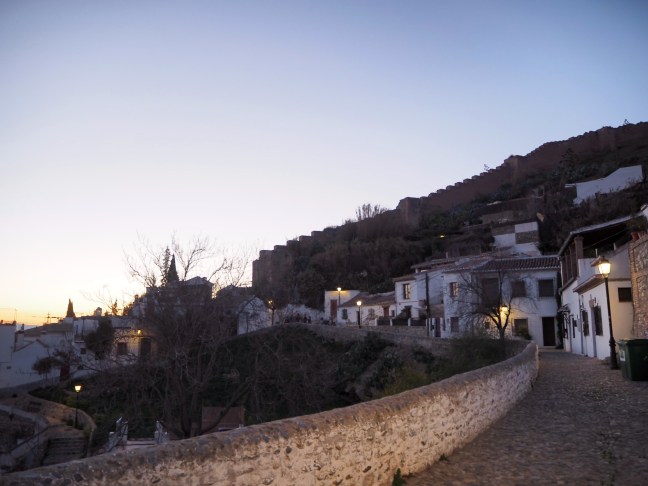
Adventure in the Albayzín Our first tour in Granada consisted of the Albayzín and its Muslim Moorish past. But our tour did not began with the Muslim history, instead our guide began with a few ghost stories. The legends and lore of ancient cities always seem to carry with them great tales of loves lost and heinous crimes committed. Each of which come with it’s very own spirit. I’m not sure how many people believe these anymore, but it does make for interesting histories.

As we ascended step after step, we learned about the history of the Albayzín area. As always, it begins with the Romans, throws in a synagogue, torn down to build a mosque, and then converted to a Catholic church. It is still fascinating to learn about such happenings a thousand years ago.  

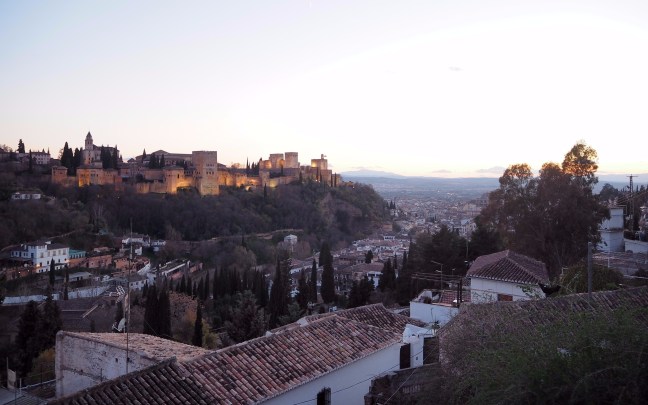
In continuing to climb the hillside, we were granted better and better views of the Alhambra.  A fortified city within a fortified city, it happens to be the most visited site in all of Spain. 

On our tour, we continued to pass houses on the hillsides and learn more about the Muslim architecture of planning and building homes, which all include a garden or patio in the center of the house with the rooms all surrounding the patio.  We happened to stay in this style of house while in Granada.

Further up the mountain, we encountered Sacromonte (Sacred Mountain), dubbed as such due to a few lies told in order to make the location a pilgrimage for Catholics. It never became much of anything other than having a fascinating name.  In Sacromonte, most of the residents live in cave houses.  Warm in the winter and cool in the summer, the caves are naturally climate controlled.  All are painted white and are very old.  They are predominantly lived in by the gypsy community, which in Spain means families long ago originating from India.

JFS60321 - Edited

Our final stop allowed us another amazing view of the Alhambra.

JFS60314 - Edited

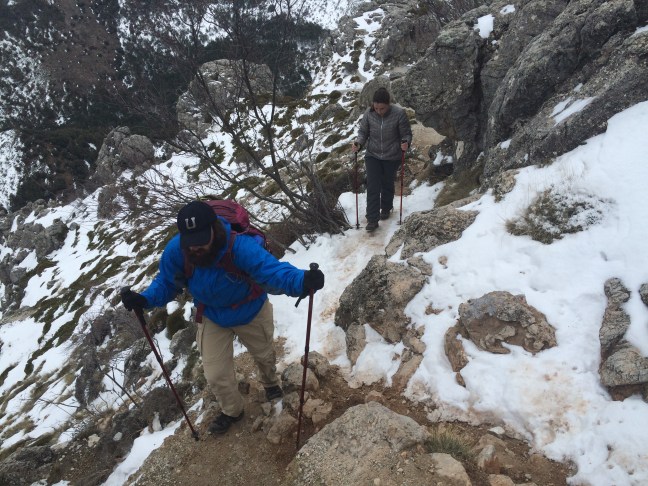
Hiking Boots and Snowballs The next day we woke up early again to head out on our hike.  Inclement weather had forced out our ability to climb a much higher mountain with pick axes and crampons.  Instead, we climbed a much smaller mountain that was probably equally as terrifying.  Our hike began pleasantly enough with a couple of hours of solid uphill walking.  It then moved to sliding uphill while traversing scree to ascend the top of the mountain.  

This bit was extremely difficult.  We had not encountered this type of climbing before and every step taken meant sliding back at least a couple of inches. There were no solid steps. And if you fell you were not going to survive the fall.

Since you are still reading, you now know we survived.

image (2).jpeg

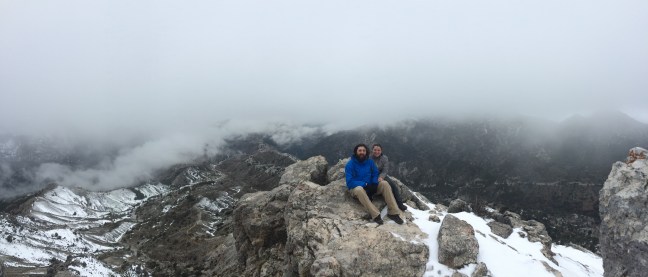
We did make it to the top of the mountain and were able to enjoy the beauty of the Sierra Nevada’s for a few minutes.  But after about 2-3 minutes, the fog rolled in through the valley. And then the sleet came. And we worked as quickly as possible to safely descend our treacherous path.

image (4)

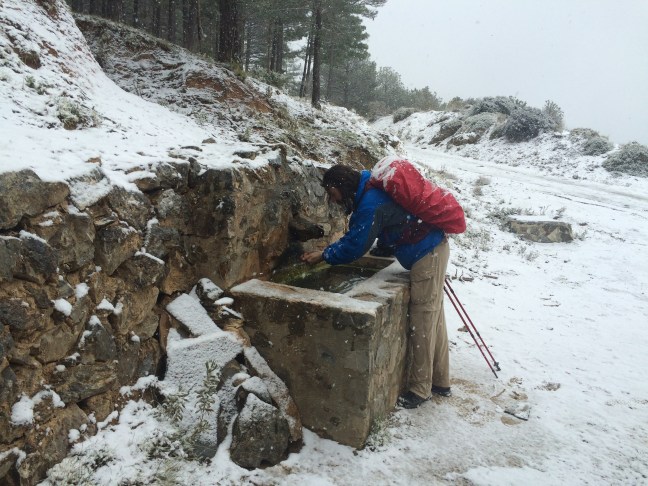
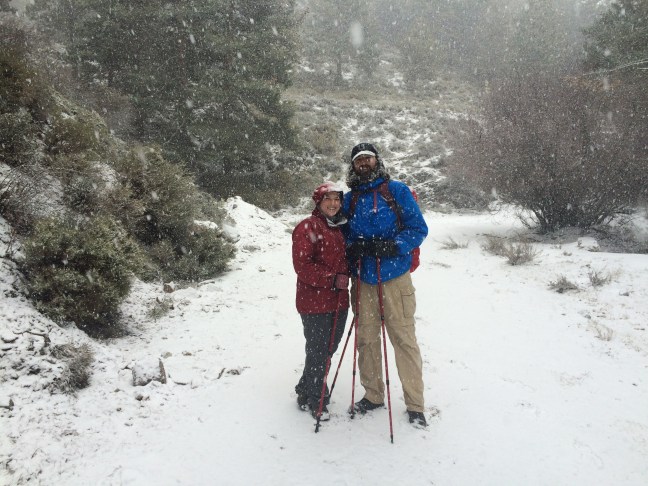
As we made it back down to the flatter section, our guide offered us two options. We chose the long way home. For that reason, we enjoyed a couple of inches of snow, sleet, freezing rain, and a few snowballs. We also were able to see many Spanish Ibex (mountain goat), a wild boar, and some bulls. 

image (3)image (5)

It was a rewarding hike covering between 10-11 miles of difficult walking.

“God is the Only Victor” It’s probably no surprise that we were very sore the next day but there was no rest for the weary because we were visiting the Alhambra.We had a small private tour to visit the Alhambra and we began the moment it opened, as did a lot of other people.  This is one of the more famous buildings in Spain. In 2014 it played host to 2.4 million people. Even in non-busy time, the place was packed. The palace itself was almost lost to history. Until recently (around the 1800s) the Alhambra had fallen into disrepair and was a haven for the homeless of Granada. It wasn’t until Washington Irving (think Sleepy Hollow and Rip Van Winkle) stayed at the Alhambra and wrote about his experiences in “Tales of the Alhambra.” This solidified the importance of the Alhambra and led to a grand restoration of the palace that still continues today.

The Alhambra is a beautiful place. Stylistically, it is much like the Alcazar in Sevilla, but with many more fountains. The Court of Lions and Fountain of Lions is one of the more impressive pieces still remaining from the original owners.  All around was inscribed the Caliph’s motto “God is the only Victor.”

Once the monarchy took control of Granada, Charles the I/V added a palace inside the grounds of the Alhambra, sticking out like a sore thumb amidst the Moorish architecture. Thankfully, much of the rest of the grounds are still from the times of the Moors.

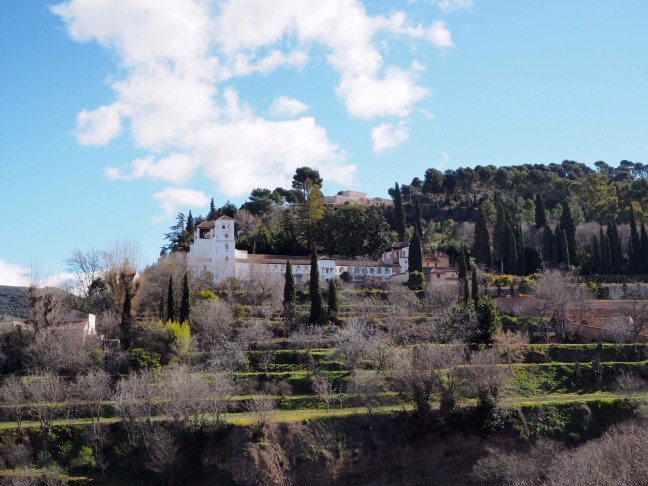
On our tour we were able to see many of the rooms of the palace, the gardens, and just up the hill, the summer home of the Caliph.  As it turns out, the Caliph of the Alhambra wanted a second house for the summer time so he built his second house about 100 feet above and 500 feet away from his winter/spring/fall house. This was a home in which he would never sleep. So really more of a summer day house. Must be nice.

JFS80436 - Edited
Summer house  with gardens

After leaving the Alhambra, we walked around the city and enjoyed the winding streets and stores lining the back alleys.  Much of southern Spain still clings strongly to the Moorish culture, no place moreso than Granada.  Most of the authentic wares in the stores are direct from Marrekech and many of the restaurants in the area serve predominantly Moroccan cuisine. We did some shopping, soaked up our last hours in Granada and headed home, ready for a long bus ride back to Madrid.

JFS60328 - Edited
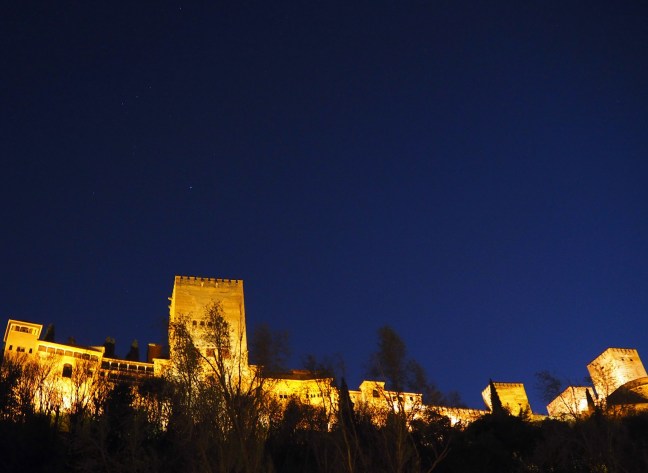
Alhambra by night
JFS80504 - Edited
Santa Ana

Córdoba

A Morning to Ourselves As we arrived to Córdoba at 7:45 on a Saturday morning, the city was empty. Nothing was open. No one was outside except a few revelers from the night before. 

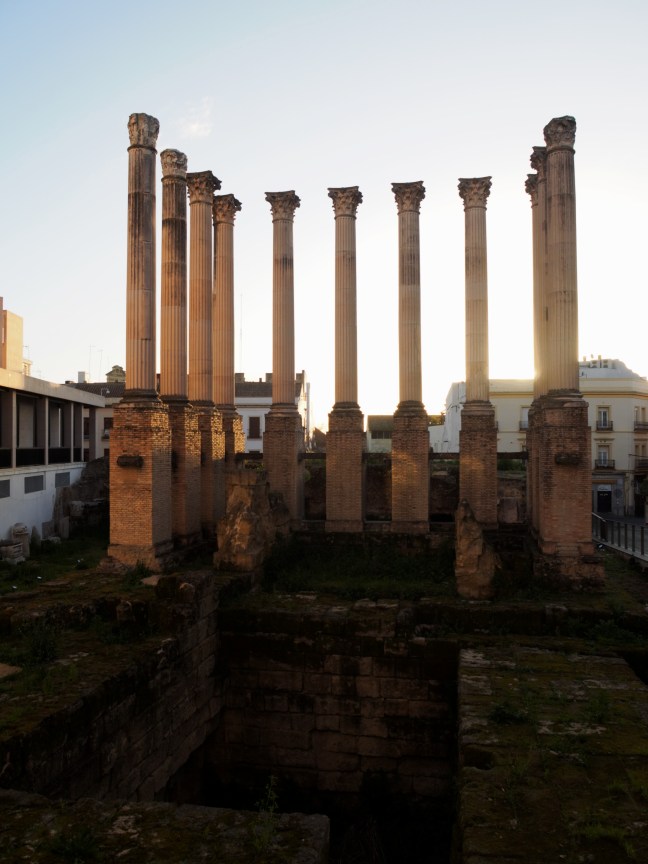
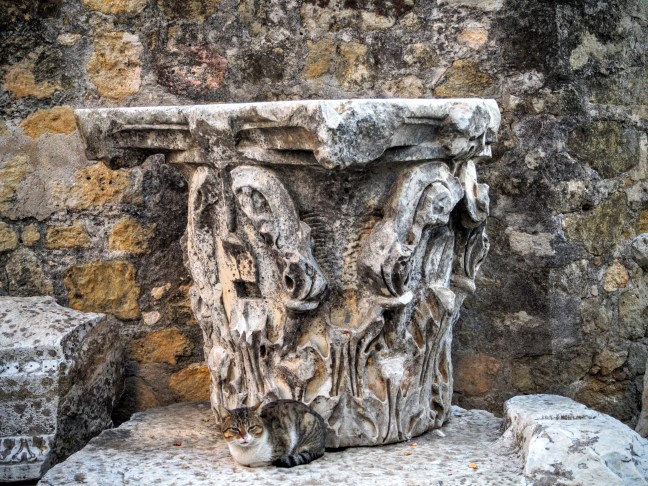
As nothing was open, we decided to stop at an attraction you can’t really close. We stopped by some Roman ruins first. Roman ruins this far west of Italy amaze us. It is incredible what the Romans were able to achieve so long ago.  These ruins were just “found” when Córdoba decided to expand city hall. Seeing the ruins without the rush of the day gave us a chance to really enjoy the ruins (and the cats basking in the morning sunlight).

JFS50342.ORF

JFS50354.ORF
Roman cat I’m sure.

After the ruins, we headed down to the river to an even more remarkable site.  The origins of the Roman Bridge of Córdoba date back to the 1st century BC.  The current bridge is a fixed up version dating from around 7-800 AD.  We were almost all to ourselves as we walked across the river and up and down the bridge.

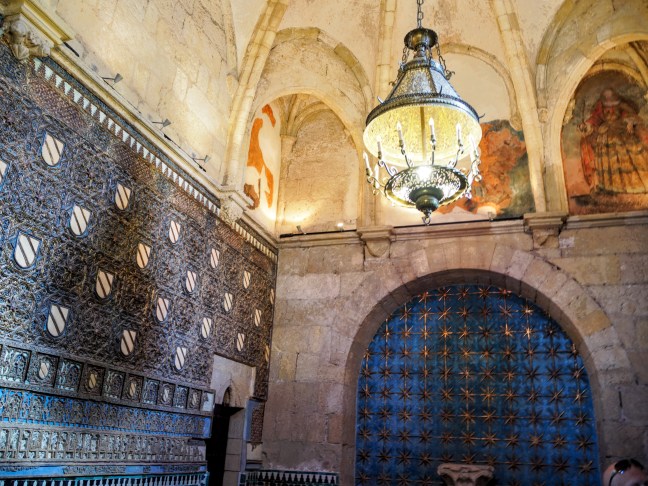
And the Tours Go On Our first tour of the day begin in the Jewish quarter of the city. It seems most every city in Spain has a Jewish Quarter and an Arab/Muslim Quarter.  While the Jewish section was only three streets (not enough streets to cover a 2-3 hour tour), we learned quite a bit about Jews in Córdoba during the rise of Christianity (it was not good). The Jews were pushed out around 900 AD and the city left the section to rot for a while. We were able to visit a former synagogue and learn more about the history of the synagogue and how it transition to a Christian church.   

JFS50404.ORF
Chapel of St. Bartholomew

The tour took us to former baths of the Muslims as well as another Alcazar.  The history behind both was fascinating and our guide was excellent. He was able to cover many centuries of history with southern Spain and its transition from the Moors to the Catholics and the Romans and Visigoths before them.  We ended the tour with getting to enjoy some Roman mosaics from 100 BC and the Alcazar gardens.

We had to end the tour at the 3:15 hour mark to make our tour at the Mezquita. Our guide was kind enough to stop everything and escort us to the Mezquita to ensure we made our next tour. The Mezquita, also known as the Mosque-Cathedral, is a massive Mosque with a Cathedral in the middle of it. It was first a Visigoth Catholic church before being leveled and turned into a mosque around the 800’s. It is a breathtaking site, particularly on the inside.  The Moorish architects really knew how to build something special and interesting.  It would be too easy to go on and on about the building, but instead lets just share a few photos. Clay only took a few hundred pictures.

Sometime in the 1200’s the Catholics moved into the neighborhood and petitioned to build a cathedral in the middle of the mosque as a way to Christianize it. They managed to mess up the middle of the building, closing off archways and tearing out columns. Charles V ordered that the cathedral be built within the Mosque but once the cathedral was completed he was upset and supposedly said “they have taken something unique in all the world and destroyed it to build something you can find in any city.” Luckily enough of the original mosque remains and it still has a great deal of character.

The Great Churro Search We left the Mezquita to find some churros at a stand we passed while on our Jewish tour. By this point all the stores were closed for siesta and no churro could be found.  Instead we grabbed a bite to eat at Garum 2.1.  We enjoyed some more patatas bravas and a bull tail churro, consisting of bull tail meat. We enjoyed much less the pureed tomato and bread gazpacho.

JFS50590.ORF

We walked around the city some more, down by the river, and searched for a churro.  We arrived back in Sevilla at around 8:30 PM with no churros. We did enjoy riding in first class on the way back on the train. Elizabeth is still of the opinion that we were in the wrong train car. The difference in first class is fewer seats, a movie playing for your convenience, and a distinct lack of teenagers. It was not as if we enjoyed champagne and caviar, but Clay did enjoy the lack of teenagers.


Having no luck with the churros in Córdoba, we headed out to find them the moment we got back to Sevilla.  Finding the best churro place in Sevilla was easy.  They were closed. Clay was inconsolable. And badmouthing all of Spain and their siestas, their narrow roads, and obsession with potatoes.

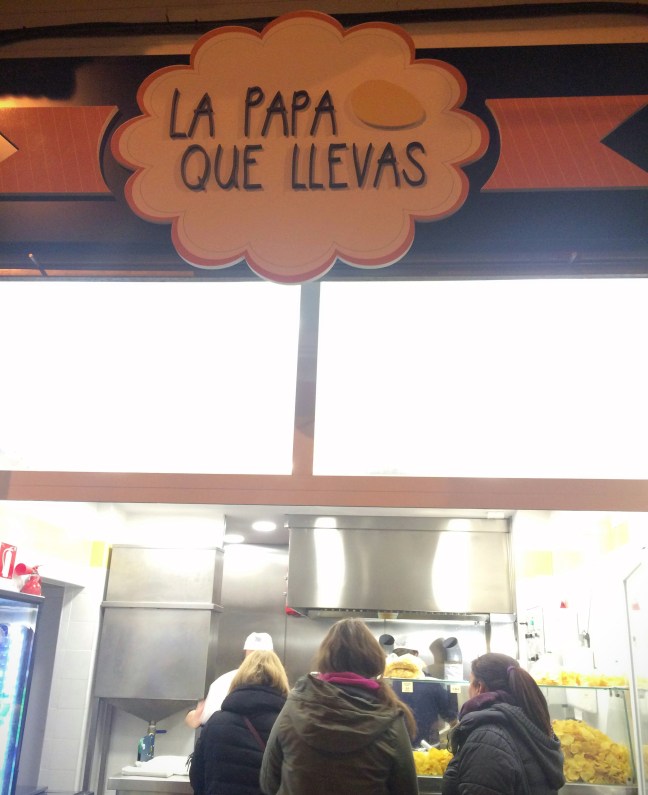
So we decided to just go home. Clay needed food to make him happy. Thankfully we found some on the way home.  In the form of potatoes. A small store selling freshly cooked potato chips. Plainly salted and nothing else. They were great. Like a warm Golden Flake Thin N Crispy chip. God bless potatoes.

IMG_0714

We also added some donut holes on a stick to our walk at another store. One half sugar, the other half chocolate dipped. It made the lack of churros palatable.

We finished the night with more cured meat and cheese and an early bedtime. We were leaving for Granada at 8 AM. Where we would finally get churros.

Sevilla: Home to the Barber and Carmen

We arrived in Sevilla after a long day of flying from Dublin to Madrid to Sevilla.  Our only checked bag (containing all our clothes for 6 months) was too tired to make both flights and instead spent the night in Madrid (this would explain wearing the same clothes three days in a row in pictures).

Once we gave up on the luggage bit, we caught a cab to meet our host at the Airbnb and headed out for tapas.  Our airbnb was in between the tourist section of town and the locals’. Tapas was held deeper within the local section of town at Duo Tapas.  

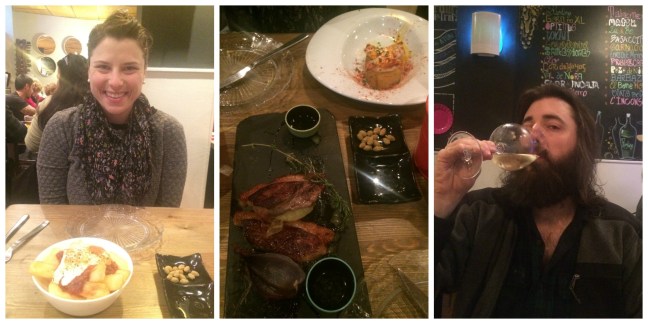
Our first dish out was patatas bravas, basically french fries.  We had several other items arrive at our table, all of which had the unknown inclusion of a potato.  A hearty addition to be sure, but we could only laugh as each tapas came out and we began to feel more Irish than Spanish.

PicMonkey Collage.jpg

The next morning we grabbed breakfast at another local spot far away from the monuments and hotels.  No biscuits in Spain, as everything comes on/with toast.  I (Clay) ordered too much toast.  Not enough marmalade, butter, or jamon y queso.  We did not manage to eat all eight pieces of bread before we left on our first tour, but we tried. We did manage to eat all the jamon y queso (we have priorities).

Our first excursion on this trip was a walking tour around Sevilla.  It covered most of the high points of Sevilla. The Cathedral, Alcazar, a few plazas, a beautiful former Tobacco factory (inspiration for the opera Carmen) and an empty Plaza de Espana.  The Cathedral was incredible as was the Plaza de Espana.

There are not a lot of words to describe such places other than amazing. The Plaza de Espana is where we learned about the World Expo held in Sevilla in the 1920’s. I then mentioned to Elizabeth that Knoxville, TN held one in the 1980’s. She did not believe me.

After the tour of the city, we headed to the Alcazar.  One of the many palaces for the royal family of Spain, it’s another old building. And another amazing one.  Learning about the history of Spain between the Romans, Moors, and Catholics is fascinating.  Lots of terrible times, but still fascinating.

Much of the part of the Alcazar we toured (and I photographed) is heavily influenced by the Muslim artisans, Mudejars,  who created these structures. The style most people would associate it with would probably be Moroccan. The Mudejar were using Arab design in Christian buildings. Incredible tile work, carvings, and ceilings.  Of course over time the building changed owners and the building now consists of so many styles it’s just a mish mash from over the last 1000 years.

While touring the lovely gardens of the Alcazar, Elizabeth fell down the stairs in front of a lot of French high schoolers.  They were not impressed and continued smoking their cigarettes.  Clumsy Americans. Her only injuries were her pride and her thumb.  Her thumb has recovered.

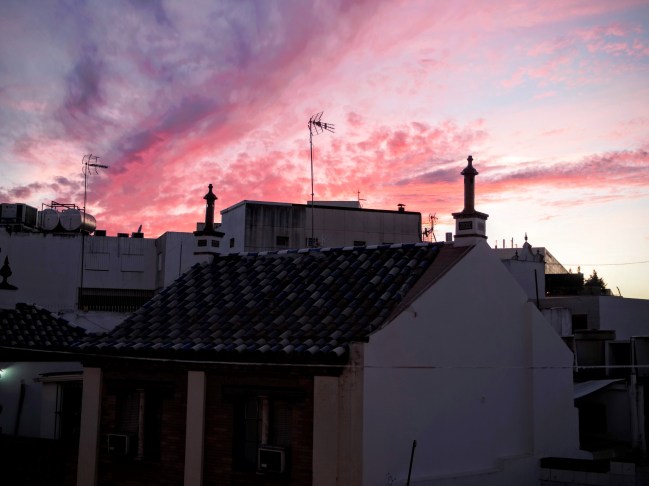
After our exciting day, we grabbed some cured meat, cheese, and wine and watched the sunset on our rooftop.JFS40302.ORF

That same night, we had a flamenco show scheduled.  We were somewhat familiar with flamenco dancing, but this was intense.  We were within a few feet of the stage and the pounding of the dancers feet surrounded us.

It was very loud and exhilarating with singing and dancing.  We didn’t understand a word, but we could understand the looks and body language present between the dancers and between the dancers and the singer. To us, flamenco was like passionate tap dancing.  Lots of movement of the body across the stage in addition to the movement of the feet.

IMG_0650

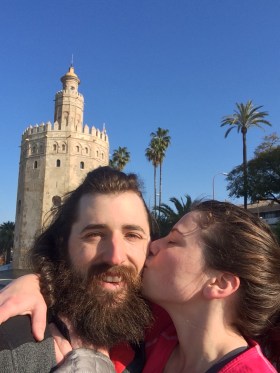
The following morning Elizabeth begrudgingly agreed to go for a run through the city and down by the river in Sevilla. Suffice to say it was more walking than running but we did get to do a bit of sightseeing, catching a glimpse of the bullring, the river, and some old tower from the 1200’s.  Amazing to get to see such ancient buildings.

After the run, we headed to the Cathedral of Sevilla for a tour of the inside of the building.  Again, more amazing craftsmanship. The intricate pillars and columns are so detailed.  The woodworking in this Cathedral is also quite impressive.  The cathedral happens to be the third largest in the world and largest Gothic style in the world. It was big.

We then climbed the bell tower/minaret for a view of all of Sevilla.  The tower is a bell tower now but was previously a minaret when the site was host to a mosque, long torn down since the Muslims left and the Catholics moved to town.  The Catholics tore down most every bit of the Mosque except for the minaret. I suppose this bit of craftsmanship was too nice to destroy. The Catholics just added another section on top of the minaret, added a bell and a cross, and voila, Muslim tower no more.

Views from the tower are lovely.  We were able to see the sections of city we had already visited, the river where we ran, the bullring, and ever the area where we were staying. Really great views from here.

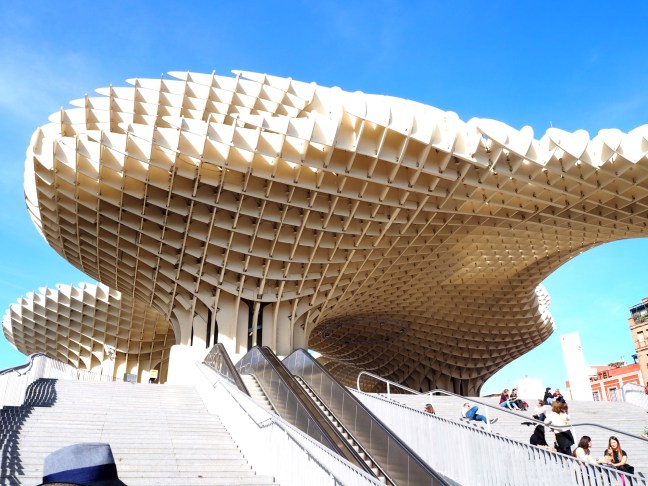
After the Cathedral, we traipsed around the city with no direct plans and found ourselves at the Espacio Metropol Parasol.  We left after a bit and headed back to our rooftop for some snacking and to continue to celebrate our trip with some cava.

JFS40279 - Edited

For dinner, we went to a place call No Lugar and we were the first to arrive as the doors open at 8:30. Spain really is at a different pace and we are still trying to figure out who siestas when. I ordered too much food for us at dinner, but we managed to shovel it down.  We stuck to mostly vegetables as our diet as of late consisted almost exclusively of jamon, queso, toast, and potatoes.

The next day we took a day trip to Cordoba to see the Mezquita and roman ruins and then it was off to Granada. All in all, Sevilla was a lovely and lively city that introduced us to the history of Spain.